

Home About Blog Contact
Warm tea cup with steam in soft window light

Understanding Emotional Influences on Eating Patterns

An educational exploration of how emotions, food choices and eating behaviors connect in everyday life. Educational content only. No promises of outcomes.

Physiological Overlap of Emotions and Appetite

The relationship between emotional states and eating behavior involves complex physiological systems. When we experience stress, anxiety or other emotions, our bodies undergo measurable changes in hormone levels.

Key hormonal systems include:

  • Cortisol – the primary stress hormone, influences appetite regulation and food preferences
  • Serotonin – affects mood and eating patterns through neurochemical pathways
  • Dopamine – associated with reward and motivation in eating experiences

These systems operate independently but overlap in how they affect appetite signals and food choices, creating a multifactorial system rather than a simple cause-and-effect relationship.
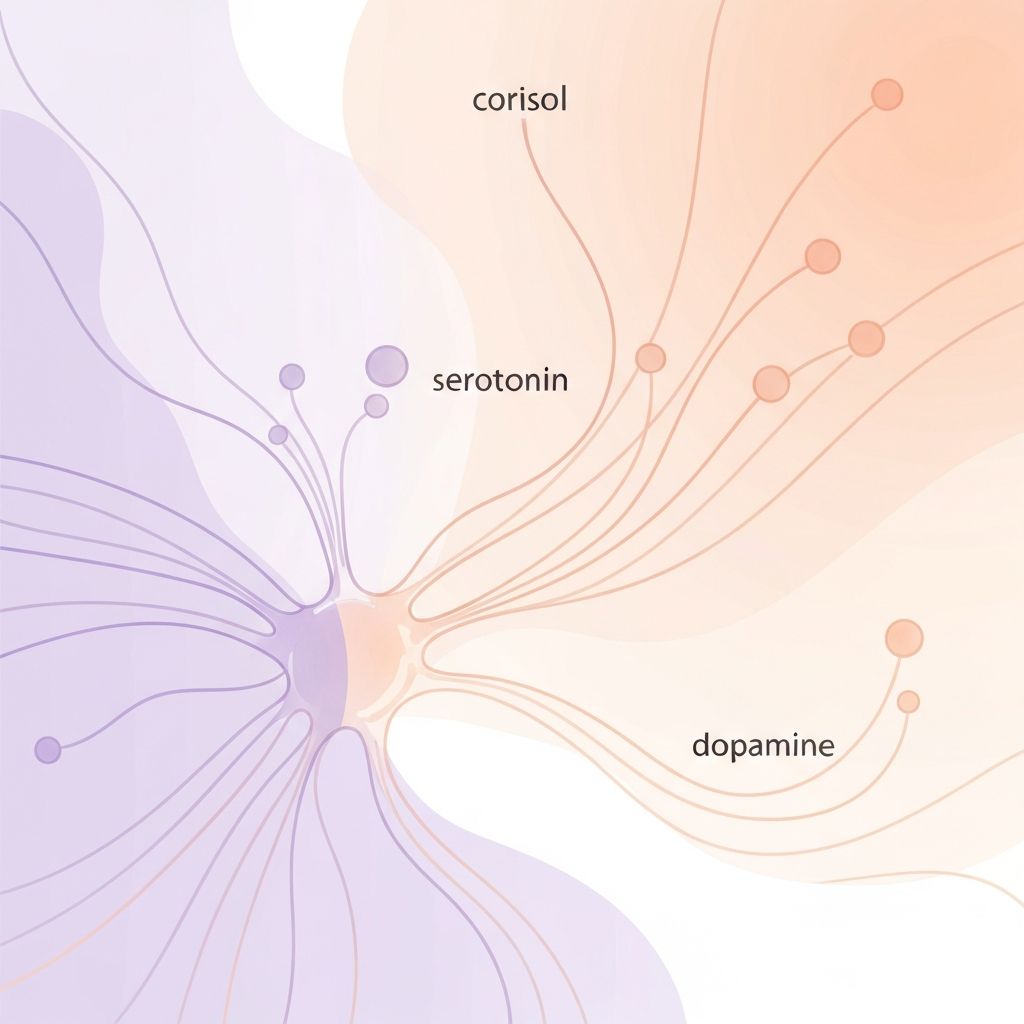

Abstract illustration of neurochemical pathways and hormonal connections

Common Emotional Triggers in Research

Population-based studies have identified recurring patterns in which emotional states associate with eating behaviors. These observations are presented neutrally as observed phenomena without value judgment.

Stress

Elevated cortisol and other hormonal changes during periods of psychological or physiological stress correlate with shifts in appetite and food choice preferences. Patterns vary widely between individuals.

Boredom

States of low stimulation and understimulation show associations with increased eating frequency in observational research. The distinction between hedonic eating and appetite-driven eating becomes less clear.

Loneliness

Periods of social disconnection correlate with alterations in eating patterns in epidemiological data. Food may serve a sensory or mood-regulating function during such states.

Physical Hunger vs Emotional Urges

Distinguishing between physical hunger signals and emotionally-driven eating urges involves understanding different physiological and psychological cues.

Physical Hunger Characteristics

  • Develops gradually over time
  • Associated with stomach sensations or energy decline
  • Satisfied by various food types
  • Typically diminishes after adequate food intake
  • Occurs at relatively predictable intervals

Emotional Urges Characteristics

  • Emerges suddenly or in response to specific triggers
  • Often targets specific foods or food types
  • May persist despite intake
  • Often associated with distinct emotional states
  • Pattern varies based on individual learning history and context
Rain-streaked window with blurred urban view, contemplative mood

Food as Short-Term Mood Regulator

Food operates as a multi-sensory experience with documented effects on neurochemical states. This mechanism operates through several pathways:

  • Sensory feedback – taste, texture and aroma activate reward centers
  • Neurochemical effects – nutrient composition affects neurotransmitter availability
  • Behavioral conditioning – learned associations between food and emotional relief
  • Oral stimulation – mechanical and tactile sensations provide temporary distraction

These effects are typically temporary, with mood regulation benefits lasting minutes to hours depending on various individual and contextual factors.

Cosy blanket with steaming herbal infusion in natural window light

Cycle of Emotional Eating Patterns

Observational research identifies a recurring sequence in emotional eating episodes, though the intensity, frequency and specific triggers vary considerably between individuals and contexts.

Abstract rippling water surface representing cycles and patterns

Typical Sequence

  1. Emotional trigger: Stress, boredom, loneliness or other emotional state emerges
  2. Physical response: Hormonal changes and appetite signals shift
  3. Urge formation: Desire for specific foods or eating behavior increases
  4. Consumption: Eating episode occurs with variable duration and quantity
  5. Temporary relief: Sensory and neurochemical effects provide short-term mood modification
  6. Resolution phase: Emotional state and appetite typically return toward baseline
  7. Aftermath reflection: Some individuals experience guilt, shame or cognitive processing of the episode
"Individual variation in emotional-eating cycles reflects differences in physiology, learned associations, stress responses, food availability, social environment and personal history. No universal pattern exists."

Role of Awareness in Observation

Research on mindfulness-based approaches emphasizes non-judgemental awareness of eating patterns and emotional states. This involves:

These approaches emphasize observation rather than intervention, awareness rather than behavior modification, and acceptance of variability rather than pursuing standardized outcomes.

Individual Variability in Emotional-Food Associations

The intersection of emotions and eating behaviors shows profound individual variation based on:

What triggers eating in one person may not affect another. What provides comfort to some may cause distress to others. Individual assessment and self-observation remain more informative than generalized recommendations.

Research Context on Prevalence

Observational and survey-based studies indicate that emotional-eating patterns are common observations in population samples. Research shows:

Epidemiological findings confirm that emotional-eating connections represent common human experiences across diverse populations rather than pathological conditions exclusive to specific groups.

Explore Detailed Topics

These six foundational explorations delve deeper into specific intersections of emotion, physiology and eating behavior:

Neurochemical Links Between Mood States and Food Choices

Discover the mechanisms through which emotional states influence neurochemical pathways that regulate appetite, food preference and eating behavior.

Explore this concept →

Common Emotional Triggers and Their Observed Patterns

View detailed information on research-identified emotional triggers and the patterns observed in how different emotional states associate with eating behaviors.

Learn more about →

Distinguishing Physiological Hunger from Emotional Drives

Read the detailed explanation of key differences between physical appetite signals and emotionally-motivated eating urges.

Discover the mechanisms →

Short-Term Mood Regulation Through Eating Experiences

Explore this concept of how food functions as a sensory and neurochemical mood-regulating mechanism with temporary effects.

See supporting information →

Typical Cycles Observed in Emotional Eating Sequences

View related research context on the recurring patterns and individual variations in emotional eating episodes.

Read more about →

Individual Differences in Emotional-Food Connections

Explore this concept of how personal history, physiology and context create distinct patterns in emotional-eating associations.

Discover the mechanisms →

Frequently Asked Questions

What is emotional eating?

+

Emotional eating refers to the pattern in which emotional states influence eating behavior and food choices. This encompasses situations where emotions trigger eating episodes, alter food preferences or affect the quantity and frequency of food consumption. It is a normal human experience observed across diverse populations.

How do emotions affect appetite?

+

Emotions influence appetite through multiple physiological pathways. Emotional states trigger hormonal changes – particularly in cortisol, serotonin and dopamine – that alter appetite signals. Additionally, emotions activate the brain's reward system, affecting food preferences and eating motivation. The specific effects vary considerably between individuals.

What are common emotional triggers for eating?

+

Research identifies stress, boredom and loneliness as frequently observed emotional triggers. However, the specific triggers vary substantially between individuals. Some people's eating increases during high-stress periods, while others experience appetite suppression. Similarly, what triggers eating in one person may have no effect on another. Individual observation remains the most accurate way to identify personal patterns.

What is the difference between physical hunger and emotional hunger?

+

Physical hunger develops gradually, involves stomach sensations, is satisfied by various foods and follows a relatively predictable pattern. Emotional eating urges typically emerge suddenly, target specific foods, may persist despite eating and show variable patterns linked to emotional states. However, these categories overlap considerably, and distinguishing between them can be difficult in real situations.

Does stress always increase eating?

+

No. While many people experience increased eating during stress, others experience appetite suppression or no change in eating behavior. Individual responses to stress vary based on physiology, previous experiences, personality factors and current circumstances. Patterns also vary within individuals – the same stressor might produce different effects depending on context and timing.

How do comfort foods work?

+

Comfort foods function through multiple mechanisms: sensory pleasure from taste and texture, neurochemical effects from nutrients, learned associations between the food and emotional relief, and distraction from negative emotional states. These effects are typically temporary, lasting from minutes to hours. The specific foods that provide comfort are highly individual and shaped by personal history and cultural context.

Is emotional eating a disorder?

+

Emotional eating itself is not classified as a disorder. It represents a common pattern observed across diverse populations. However, when eating patterns cause significant distress or interfere with wellbeing, professional assessment by qualified healthcare providers becomes appropriate. This resource presents emotional eating as a normal phenomenon rather than a pathological condition.

How does awareness help with eating patterns?

+

Awareness-based approaches emphasize noticing patterns without judgment or attempts to change them. This neutral observation can increase understanding of personal triggers, patterns and responses. Some research suggests that non-judgemental awareness may support shifts in behavior, though individual responses vary. Awareness is presented as a tool for understanding rather than a solution for changing patterns.

Can everyone experience emotional eating the same way?

+

No. Individual variation in emotional eating is substantial and reflects differences in physiology, learned associations, stress responses, food availability, social environment and personal history. What triggers eating in one person may not affect another. What provides comfort to some may cause distress to others. Personalized observation and understanding are more informative than generalized approaches.

What role does context play in emotional eating?

+

Context substantially influences emotional eating patterns. Current circumstances – sleep quality, overall stress levels, resource availability, social environment and specific situations – all affect how emotions influence eating. The same emotional state might produce different effects in different contexts. Understanding personal patterns requires attention to the broader circumstances in which eating occurs.

Are there research-based awareness approaches?

+

Yes. Mindfulness-based approaches, particularly those informed by psychological research, emphasize non-judgemental observation and awareness. This website presents information on how awareness-based approaches have been studied without claiming superiority or universal applicability. Individual responses to different approaches vary considerably, and consultation with qualified professionals remains important for personal concerns.

Continue Exploring Eating Behaviour Contexts

This educational resource provides information on the complex relationships between emotions, physiology and eating patterns. Explore the detailed articles and resources to deepen your understanding of these interconnected systems.

Educational content only. No promises of outcomes.

This resource presents information for learning purposes. Content is not individual guidance, medical advice or therapeutic intervention. Eating and emotional patterns vary widely between individuals. For personal concerns, consultation with qualified professionals is appropriate.